
Screen Time for Kids: Practical Ways Parents Can Encourage Screen-Free Learning
There is no denying it. Screens are everywhere.
They are in our homes, cars, restaurants, classrooms, airports, shopping malls and, quite often, in our children’s hands. From televisions and tablets to phones, gaming devices, digital books and online classes, screens have quietly become part of everyday childhood.
And to be fair, not all screen time is bad.
A good documentary can spark curiosity. A video call with grandparents can build connection. A learning app can sometimes help. But when screens become the default answer to boredom, restlessness, travel, mealtimes or tantrums, we may have a problem on our hands.
Most parents know this already. The real question is not whether children should have less screen time. The real question is this:
How do we reduce screen time for kids without turning every evening into a battlefield?
The answer, thankfully, is not to ban everything overnight. It is to replace passive screen time with richer, more engaging alternatives — stories, games, puzzles, colouring, outdoor play, conversations and hands-on activities that children actually enjoy.
That is where screen-free learning becomes powerful.
How screen time affects children’s well-being
Excessive screen time can affect children in several ways. It may disturb sleep, reduce concentration, affect mood, limit physical movement and take away time from real-world play.
The problem is not just the screen itself. The problem is what it replaces.
When a child spends too much time on screens, there is often less time for running, building, drawing, reading, solving, pretending, helping around the house, talking to family, or simply being bored enough to invent something new.
And boredom, despite its bad reputation, is rather useful.
It is often in those “I don’t know what to do” moments that children discover a book, pick up crayons, create a game, build something strange, or ask a question that leads to a proper conversation.
Screens entertain quickly. But screen-free activities invite children to participate.
There is a difference.
Recommended screen time limits for kids
Many pediatric recommendations suggest that very young children should have little to no screen time, and that older children should have clear, age-appropriate limits.
As a practical parenting rule, the younger the child, the more careful we need to be.
For toddlers and young children, screen time should be limited, supervised and purposeful. For older children, the focus should be on balance — enough time for schoolwork, sleep, physical activity, reading, family interaction, creative play and rest.
Before publishing, I recommend verifying the latest Indian Academy of Pediatrics or WHO/AAP screen-time guidance and linking to the official source if you include exact age-based limits.
For most families, the best approach is not only to limit screen time, but to create a healthy daily rhythm where screens do not replace sleep, outdoor play, reading, family time, physical movement and creative activities.
Why reducing screen time is difficult
Let us be honest. Screens are convenient.
They keep children quiet in restaurants. They help during travel. They buy parents a few minutes during calls, chores or work. They can calm a tantrum faster than most other things.
This is why reducing screen time is difficult. It is not only the child’s habit. It is often the family’s coping system.
So, the goal should not be parental guilt. That helps nobody.
The goal should be gradual change.
Small changes, done consistently, work better than dramatic bans that collapse within two days.
A screen-free routine is built the same way most good parenting habits are built — imperfectly, patiently and with some amount of negotiation.
Set clear screen time rules
Children handle limits better when they know what to expect.
Instead of deciding screen time randomly each day, set simple rules. For example:
- No screens during meals.
- No screens before school.
- No screens one hour before bedtime.
- Screen time only after homework or reading.
- Screens only in shared family spaces, not bedrooms.
The rule itself matters. But consistency matters even more.
If the limit changes every day depending on the parent’s mood, children will naturally negotiate every day. And if there is one thing children are excellent at, it is negotiation.
Keep the rules simple, visible and realistic.
A rule that can be followed is better than a perfect rule that fails by Wednesday.
Create screen-free zones at home
One of the easiest ways to reduce screen time for kids is to create screen-free zones.
Start with the dining table.
Meals are not just about food. They are opportunities for conversation, manners, listening, storytelling and family bonding. A screen at the table quietly steals all of that.
Bedrooms are another important screen-free zone. Children sleep better when screens are not part of the bedtime routine. Instead, bedtime can become a space for reading, storytelling, quiet conversation or simply winding down.
You can also create a small reading or activity corner at home. It does not need to be fancy. A few books, colouring materials, puzzles, games and DIY kits are enough.
Replace screen time with better alternatives
The mistake we often make is telling children what not to do.
“Don’t watch TV.”
“Don’t take the phone.”
“Don’t play games.”
“Don’t sit with the tablet.”
All perfectly valid. Also, not always very effective.
Children need something to do instead.
This is where screen-free activities matter. If we want children to move away from screens, we must give them alternatives that are engaging, accessible and enjoyable.
Reading a story. Solving a puzzle. Colouring a character. Building with a DIY kit. Playing a board game. Going downstairs to play. Helping cook. Creating a treasure hunt. Drawing a new ending to a story.
The best alternatives are not necessarily expensive. They are simply active.
They ask the child to think, move, build, imagine or participate.
Educational toys for kids
Board games
Card games
Use stories to make screen-free time exciting
Children are far more likely to leave a screen when the alternative feels like an adventure.
This is where stories help.
A book is not just something to read. It can become the beginning of a game. A character can be coloured. A scene can be built. A problem can be solved. A mystery can be discussed. A new ending can be invented.
A story gives children a world to enter.
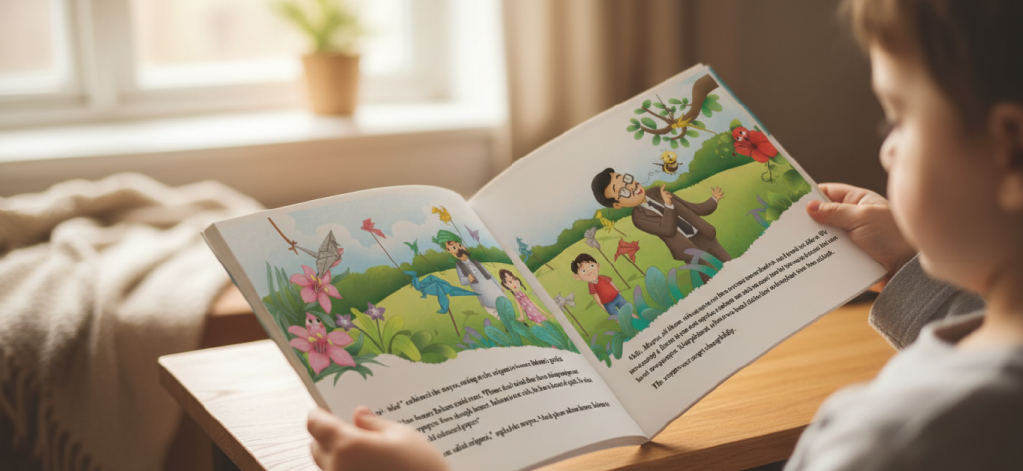
For example, after reading a Biplob story, a child can draw a garden for Biplob, colour a favourite character, solve a story-based puzzle, or go outdoors looking for bees, flowers and leaves. After reading a mystery, children can create clues around the house or play detective with family members.
Suddenly, screen-free time is not a punishment.
It is play.
Children’s Books
Story based learning
Colouring Books
Bring back hands-on play
Screens are largely passive. Hands-on play is active.
That is why puzzles, colouring books, blocks, DIY kits, board games and card games continue to matter. They invite children to use their hands, eyes, bodies and minds together.
A story-based jigsaw puzzle builds patience, visual recognition and problem-solving. A colouring book builds focus and fine motor control. A STEM.org certified DIY kit encourages building, sequencing, curiosity and early STEM learning. A board game teaches turn-taking, patience and strategy.
These activities do something screens often do not.
They slow children down.
And sometimes, slowing down is exactly what children need.
Storybased Jigsaw Puzzles
STEM.org certified DIY kits
Colouring books for kids
Schedule screen-free times
It helps to have fixed screen-free periods during the day.
Meals, homework time and bedtime are good places to begin. The hour before sleep is especially important because children need time to settle down.
You can also create a family screen-free hour.
This does not need to be dramatic. It can be a simple daily or weekend ritual where everyone reads, plays, walks, cooks, solves a puzzle or plays a game together.
The important part is that adults participate too.
Which brings us to the uncomfortable bit.
Be the role model
Children notice everything.
They notice when we tell them not to use screens while checking our own phones every few minutes. They notice when we ask them to read while we scroll. They notice when we say “just five minutes” and then disappear into the phone ourselves.
This is not to shame parents. We are all guilty of it.
But if we want children to build healthier screen habits, we have to model those habits ourselves.
Put the phone away during meals. Read a book where your child can see you. Play a game with them. Go for a walk. Colour with them. Build something badly and laugh about it.
Children imitate what we do far more than what we say.
Unfortunately, and fortunately, that is how parenting works.
Reward screen-free behaviour, but don’t make screens the prize
Positive reinforcement helps.
Praise children when they spend time reading, playing outdoors, colouring, building or solving a puzzle. Notice the effort. Celebrate the creativity. Join the activity when possible.
But be careful not to make screen time the only reward.
If every screen-free activity ends with “Now you can watch TV,” the screen remains the ultimate prize.
Instead, rewards can be choosing the next family game, picking the bedtime story, planning a weekend activity, inviting a friend for playtime, or displaying their artwork at home.
Over time, children begin to discover something wonderful.
Being screen-free can be a reward in itself.
Simple screen-free activities parents can try at home
1. Read and act out a story
After reading a story, ask your child to act like a character. This builds imagination, language and movement.
2. Solve a story-based jigsaw puzzle
Puzzles keep children engaged while building patience, focus and hand-eye coordination.
3. Colour a favourite character
Colouring is calm, creative and excellent for fine motor development.
4. Build with a DIY kit
DIY kits help children follow steps, use their hands and experience the joy of making something.
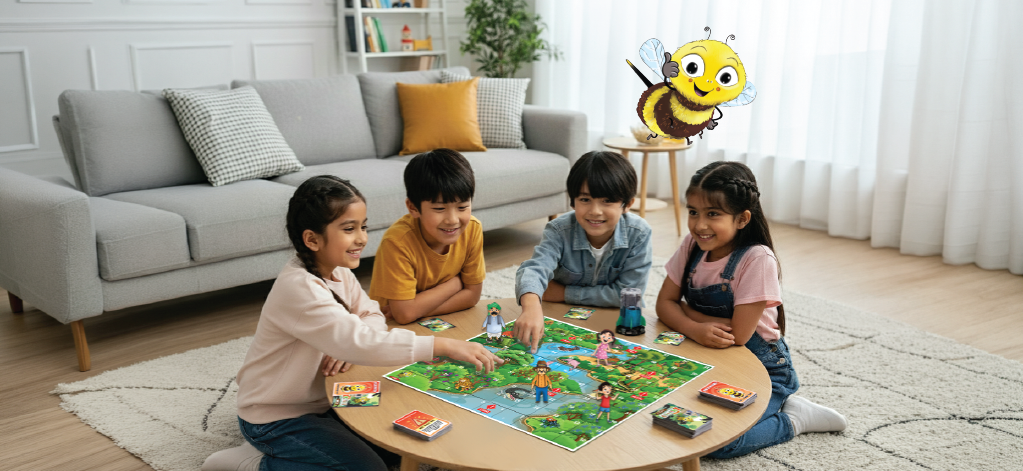
5. Start a family board game night
Board games and card games help children learn patience, strategy, turn-taking and healthy competition.
6. Create a boredom box
Fill a box with crayons, paper, puzzles, small books, cards, craft items and simple prompts. When children say “I’m bored,” point them to the box.
7. Go outdoors, even briefly
A short walk, a game of catch, a few minutes in a garden or a quick run downstairs can reset a child’s mood better than we imagine.
Where Biplob World fits in
At Biplob World, we believe children learn best when stories move beyond the page.
A story can become a puzzle. A character can become a colouring activity. A theme can become a board game. A question can become a DIY project. A family moment can become a memory.
That is the idea behind story-based, screen-free learning.
Not forced learning. Not passive entertainment. Not another device.
Just children doing what they naturally love to do — imagine, move, solve, build, colour, ask and create.
Biplob World
Learning through stories
Explore screen-free learning with Biplob World
Looking for meaningful alternatives to screen time?
Explore Biplob World’s collection of:
- STEM.org certified DIY kits
- Story-based jigsaw puzzles
- Colouring books for kids
- Children’s storybooks
- Board games and card games
Each product is designed to help children think, create, move, solve and discover — one story at a time.
Explore Screen-Free Learning
Shop Now
FAQs on screen time for kids
How much screen time is okay for kids?
Screen time should be age-appropriate, supervised and balanced with sleep, outdoor play, reading, family interaction and hands-on activities. Younger children need stricter limits, while older children need clear rules and healthy routines.
How can parents reduce screen time for kids?
Parents can reduce screen time by setting clear rules, creating screen-free zones, scheduling screen-free times, offering engaging alternatives, encouraging outdoor play and modelling healthy screen habits themselves.
What are good screen-free activities for children?
Good screen-free activities include reading, colouring, solving jigsaw puzzles, playing board games, building with DIY kits, outdoor play, storytelling, drawing, craft activities and family conversations.
Why is too much screen time harmful for children?
Too much screen time can affect sleep, mood, concentration, physical activity, family interaction and creative play. It may also reduce the time children spend reading, moving, building and exploring the real world.
How can stories help reduce screen time?
Stories make screen-free time more engaging. Children can read a story, act it out, colour characters, solve story-based puzzles, create clues, build scenes or invent new endings.
Are educational toys better than screen time?
Educational toys that invite active participation can be very useful because they encourage children to build, solve, imagine, move and create. Books, puzzles, colouring books, board games and DIY kits offer hands-on learning that screens often cannot replace.
How do I create a screen-free routine at home?
Start with simple rules: no screens during meals, no screens before bedtime, and one family screen-free activity each day. Keep books, puzzles, games, colouring materials and DIY kits easily accessible.
Reducing screen time is not about making technology the villain.
It is about giving childhood enough room to breathe.
Children need stories, movement, boredom, questions, mistakes, laughter, books, colours, puzzles, games, outdoor play and family conversations. They need time to use their hands, stretch their imagination and discover what they can do without a glowing screen telling them what comes next.
As parents, we do not have to get it perfect.
We only have to begin.
One screen-free meal.
One bedtime story.
One puzzle.
One walk.
One game.
One DIY kit.
One conversation.
Small, steady steps can change the rhythm of a home.
And very often, once children rediscover the joy of doing, making and imagining, screen-free time stops feeling like a rule.
It starts feeling like childhood again.