
Road Trips with Kids: How to Keep Children Engaged, Happy and Screen-Free on Long Drives
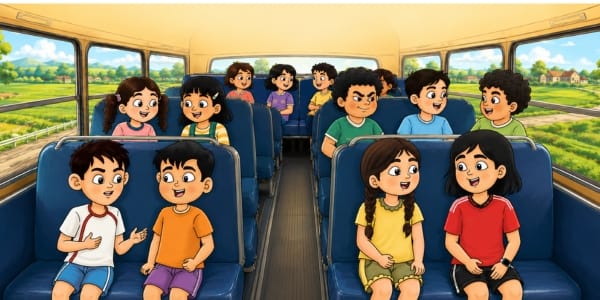
For most parents, the prospect of being stuck with cranky kids in a moving car is their worst nightmare come true.
In fact, a lot of parents I speak with rate this as one of the main reasons they avoid road trips altogether. A common refrain is:
“You guys are lucky your kids travel well. Mine get bored too easily. Then it becomes impossible to manage them.”
Utter rubbish.
Children do not magically become good travellers. They learn to travel well. And parents, if we are honest, also learn how to travel better with them.
Road trips with kids are not always smooth. There will be whining, hunger, boredom, sudden bathroom emergencies, sibling arguments, mysterious crumbs, lost pencils, wrong turns, and at least one dramatic declaration that “this is the worst trip ever.”
That is part of the package.
But road trips can also become some of the richest family experiences you will ever have.
Long drives give families something increasingly rare: uninterrupted time together. No school rush. No office calls, hopefully. No classes to run to. No hurried dinner. No doorbell. No timetable chopping the day into pieces.
Just the road, the family, the landscape, and several hours in which conversation, stories, games, music, questions and laughter can unfold.
The trick is not to merely “survive” the journey.
The trick is to use the journey.
Biplob books
Adventures of Biplob the Bumblebee
Board games
Colouring books
Quick answer: how do you keep kids engaged on road trips?
The best way to keep kids engaged on road trips is to plan a mix of screen-free activities: books, colouring, travel games, conversation prompts, observation games, compact board games for stops, puzzles, doodling, storytelling and nature breaks. Biplob books, Detective Col. Zoro stories, Reduce to Deduce, Net Zero, Xpedition, colouring books, story-based jigsaw puzzles and STEM.org certified DIY kits can help children stay busy, think, imagine, play and bond with the family during long travel days.
Detective Col. Zoro
Reduce to Deduce
Net Zero
Xpedition
STEM.org certified DIY kits
Why road trips with kids are worth the effort
Let us first accept one thing.
Road trips with kids are work.
Packing is work. Planning stops is work. Managing food is work. Keeping children occupied is work. Answering “are we there yet?” for the 43rd time is a special category of work.
But the rewards are tremendous.
A family road trip gives children a sense of distance, geography, landscapes, people, food, weather, roads, languages, nature and time. They see the country changing outside the window. They watch cities become highways, highways become fields, fields become hills, and hills become forests.
That is education of a very different kind.
Children also get something even more valuable: long, unhurried time with parents.
In our everyday lives, conversations are often squeezed between school, work, classes, meals and bedtime. On a road trip, there is time. Time to talk. Time to ask. Time to listen. Time to be silly. Time to play games that would otherwise never happen.
I have learnt more about my children during long drives than I probably would have in weeks of regular routine.
That alone makes road trips worth it.
Do not outsource the journey to a screen
The easiest thing to do on a long drive is hand over a phone or tablet.
It is also, in my opinion, one of the worst things we can do if used as the default answer to boredom.
A road trip is not merely a logistical problem where the child has to be silenced until arrival. It is an experience. If the child spends the whole journey staring into a screen, she misses the changing landscape, the conversations, the jokes, the roadside stops, the strange place names, the animals, the fields, the weather, the songs, the family stories.
She misses the road.
And the road is the point.
This does not mean screens must be banned with military seriousness. But they should not become the first solution.
Children can be kept constructively occupied. They can draw, read, observe, play word games, listen to stories, ask questions, colour, solve riddles, invent games, spot animals, discuss the places they pass, or play compact games during stops.
Yes, it takes a little effort.
But the payoff is enormous.
Biplob books
Colouring books
Board games
Build a road-trip activity kit
Before any long drive, pack a small road-trip activity kit for your child.
This does not have to be elaborate. In fact, the simpler the better.
A good road-trip kit can include:
- A storybook or early reader book
- A small colouring book
- Crayons or colour pencils
- A notebook or doodle pad
- A magic slate or small whiteboard
- A few word-game prompts
- A compact board game for stops
- A story-based puzzle for longer breaks or hotel evenings
- A small DIY kit for destination downtime
- A few favourite songs or audiobooks
The important thing is variety.
Children get bored when there is only one option. A kit gives them choices. And choice gives them a sense of control, which is useful when they are strapped into the backseat for hours.
Biplob books
Colouring books
Story-based jigsaw puzzles
STEM.org certified DIY kits
Use books as travel companions
A good book is one of the best things to carry on a road trip.
Not necessarily for reading continuously while the car is moving — some children get motion sick, and that is no fun for anyone. But books are wonderful during breaks, hotel evenings, slow mornings, mealtimes, or quiet stretches when the road is smooth and the child is comfortable.
Adventures of Biplob the Bumblebee works especially well for family travel because it naturally connects with nature, curiosity and observation. A child reading about Biplob can then look outside and notice flowers, trees, bees, fields, gardens and landscapes more attentively.
The book becomes a lens.
Similarly, Detective Col. Zoro can turn a journey into a mystery-minded adventure. Children begin to notice clues, ask questions, observe places and invent their own cases.
That is the beauty of story-led travel.
A book does not end on the page. It spills into the journey.
Adventures of Biplob the Bumblebee
Detective Col. Zoro
Colouring books are perfect for slow travel moments
Colouring books are one of the most underrated travel tools.
They are simple, portable, screen-free and calming. They give children something to do with their hands while staying seated. They also help them slow down during overstimulating travel days.
A Biplob colouring book can work beautifully on road trips because children can colour characters, flowers, nature scenes or story moments while discussing what they have seen along the way.
Ask them:
“What colours did you see in the fields today?”
“Can you colour this flower like the one we saw?”
“What would Biplob see if he travelled with us?”
“Can you draw today’s road?”
These small prompts keep imagination alive.
And unlike a phone screen, colouring leaves behind a memory you can actually keep.
Magic slates, whiteboards and doodle games
We found that getting our kids one of those magic slates was very effective.
Right from when they were around two years old, and even later, those slates were among the best tools to keep them constructively occupied in the car. For hours, they would draw, doodle or invent their own games.
As they grew older, we replaced magic slates with small whiteboards and markers. Equally effective, non-messy, and they made the children feel rather important.
You can use these for:
- Drawing something seen on the road
- Making a map of the journey
- Playing tic-tac-toe
- Writing silly road signs
- Drawing Biplob visiting the place you are travelling to
- Making a detective clue board inspired by Col. Zoro
- Playing “guess what I drew”
- Tracking animals, vehicles or colours spotted on the way
This is exactly the kind of activity that keeps children busy without disconnecting them from the journey.
Adventures of Biplob the Bumblebee
Detective Col. Zoro
Building blocks and DIY thinking
Another hack that works very well is building blocks.
You would be surprised how much space the backseat of a car has when a child really wants to build something.
That said, blocks can get messy in a moving car, so use your judgement. They work better for long stops, hotel rooms, destination downtime or when the child has a stable surface.
The trick is to challenge the child to make something new with the same pieces.
A bridge.
A roadside dhaba.
A car.
A mountain.
A forest watchtower.
A home for Biplob.
A detective station for Col. Zoro.
A model inspired by something seen during the trip.
This is where DIY kits also fit beautifully. A STEM.org certified DIY kit can become an excellent road-trip companion for destination evenings or rest-day afternoons. After a long drive, sitting together to build something can be a lovely family reset.
Children get to use their hands. Parents get involved. Everyone struggles slightly. Something gets made.
That is a good evening.
Family games for the road
Play games.
Any game that works for your family.
The best road-trip games are the ones that do not require the driver to take hands off the wheel or attention off the road. Word games, memory games, observation games and associative games work beautifully.
Some favourites:
- Name, place, animal, thing
- I spy
- Guess the animal
- Twenty questions
- Vehicle colour count
- Odd number plate spotting
- Antakshari
- Story building, one sentence at a time
- “Would you rather?”
- Roadside alphabet hunt
- State/city spotting on number plates
These games do more than pass time. They lead to conversations.
A new place name may lead to geography.
An animal may lead to nature.
A strange sign may lead to a story.
A word may lead to laughter.
A question may lead to something surprisingly thoughtful.
And since you have time, you can discuss things properly.
That is the luxury of a road trip.
Board games for breaks, stops and hotel evenings
Not every game has to happen inside the moving car.
Compact board games are wonderful during long stops, meal breaks, hotel evenings, rest days or when rain traps everyone indoors.
A game like Reduce to Deduce can help children think, reason, ask questions and solve problems together. This is especially useful when the family wants an activity that is fun but not mindless.
Net Zero can introduce sustainability and eco-friendly choices in a playful way, which connects beautifully with road trips through forests, farms, hills and changing landscapes.
Xpedition can help children understand ecosystems and nature better, especially when travel takes them through wildlife areas, forests, rivers, mountains or coastal regions.
Board games give families a shared table, shared rules, shared laughter and shared memory.
That is more than entertainment.
That is bonding.
Reduce to Deduce
Net Zero
Xpedition
Board games
Use road trips for real conversations
While there are several things one can do to keep children occupied on the road, I find long drives are among the best times to have conversations with them.
Think about it.
You are together for a fairly long period. The day is not sliced into school, office, homework, dinner and bedtime. The countryside is passing outside the window. There is music playing. Everyone is relaxed. No one has anywhere else to be.
That combination is rare.
In our case, a typical day on the road has often involved 9 to 11 hours of driving, sometimes more. That gives plenty of opportunities to discuss anything under the sun.
I have learnt more about my children during road trips than I would have in several regular weeks at home.
Their thoughts.
Their fears.
Their odd theories.
Their dreams.
Their questions.
Their jokes.
Their strange observations.
Their surprisingly sharp opinions.
Children open up when conversation is not forced.
A road trip gives you that chance.
Use stories as conversation starters
Sometimes children do not know how to begin a conversation.
Stories help.
After reading a Biplob story during a break, ask:
“What would Biplob notice here?”
“Do you think bees would like this place?”
“What flowers did we see today?”
“How can we care for nature when we travel?”
After reading Detective Col. Zoro, ask:
“What clues did you spot today?”
“If this place had a mystery, what would it be?”
“Who looked suspicious at the dhaba?”
“What would Col. Zoro investigate here?”
These questions may sound silly.
That is precisely why they work.
They invite children to imagine, observe and talk.
Biplob the Bumblebee
Detective Col. Zoro
Stop frequently
As a rule, we try to drive without stopping for about two hours at a stretch.
After that, it is pretty much open season. A five-minute stop could happen anytime over the next hour if we come across a place interesting enough.
A roadside dhaba.
A cliff with a view.
A field of sunflowers.
A large tree.
A river crossing.
A small temple.
A safe open patch where everyone can stretch.
Planning a stop can itself become a family activity. When everyone is ready for a break, ask the children to help scout for a good stop.
This keeps them engaged with the road.
The idea, besides emptying bladders, is to stretch legs, breathe fresh air, move around and reset moods. You would be surprised how much a 10-minute stop can improve everyone’s spirits.
Children need movement.
So do adults, even if we pretend otherwise.
Bring nature into the journey
Road trips are wonderful for helping children connect with nature.
Unlike flights, where one place simply becomes another, road trips show children the transition. They see terrain change. Weather change. Crops change. Trees change. Houses change. Food change. Language change.
This is a living classroom.
When you stop, let children notice nature.
What trees are around?
Are there flowers?
Are there insects?
What birds can they hear?
Is the air different?
Is the soil red, black, sandy or rocky?
Are there farms?
Is there water nearby?
Do not turn it into a formal lesson.
Just ask. Let them notice.
A book like Adventures of Biplob the Bumblebee or a game like Xpedition can make these observations more meaningful. A child who has read about bees or played a game about ecosystems may suddenly look at a field or forest with different eyes.
That is exactly what good learning does.
Let children document the trip
Children love feeling responsible.
Give them a travel role.
They can maintain a trip journal, draw one thing they saw each day, list unusual place names, record animals spotted, note foods eaten, collect tickets or safe paper souvenirs, or create a “road trip mystery file.”
You can even ask them to create:
- A Biplob nature diary
- A Col. Zoro clue notebook
- A map of the trip
- A “best stop of the day” page
- A food diary
- A vehicle spotting chart
- A weather log
- A drawing of the funniest moment
This gives children ownership.
It also gives the family memories that are far more meaningful than another set of photos no one ever sorts.
Biplob the Bumblebee
Detective Col. Zoro
Colouring books
Accept that crankiness will happen
This is not to say that it is all a bed of roses.
It is not.
Despite everything, children will still get cranky sometimes. Frankly, I get cranky sometimes, so I cannot blame them.
That is life.
A road trip teaches patience like nothing else. When you realise you are in the middle of nowhere and the next proper stop is still some distance away, you learn to breathe, adjust and carry on.
Children learn this too.
They learn that discomfort is temporary. They learn to wait. They learn to share space. They learn that not every moment has to be entertaining. They learn that family travel requires cooperation.
These are useful life lessons.
Not always pleasant.
But useful.
Road trips are family bonding in motion
The best thing about road trips with kids is not the destination.
It is the in-between.
The songs sung badly.
The snacks passed around.
The stops no one planned.
The conversations no one expected.
The game that became a family joke.
The story read at a dhaba.
The child asleep in the backseat.
The view that made everyone quiet.
The argument that became funny later.
The ridiculous thing someone said at kilometre 438.
These are memories that cannot be replicated in any other setting.
Road trips allow families to bond in motion.
And when children are kept engaged through books, games, nature, stories, puzzles, colouring and conversation, the journey becomes more than travel.
It becomes family time.
Explore road-trip-friendly books, games and activities
For your next road trip with kids, pack a small screen-free travel kit with:
- Adventures of Biplob the Bumblebee
- Detective Col. Zoro
- Biplob books
- Reduce to Deduce board game
- Net Zero board game
- Xpedition board game
- Colouring books for kids
- Story-based jigsaw puzzles
- STEM.org certified DIY kits
Each one gives children a different way to read, observe, solve, colour, build, imagine and bond with family during long travel hours.
Explore Road Trip Activities for Kids
In the end
Road trips with kids are not about keeping children silent till you reach the destination.
They are about helping children participate in the journey.
Keep them occupied.
Talk to them.
Stop often.
Let them observe.
Let them draw.
Let them play.
Let them read.
Let them get bored sometimes.
Let them discover that the road itself can be interesting.
There will be bad moments.
But there will be far more good ones.
And years later, your children may not remember every hotel, every route or every meal.
But they will remember the songs, the games, the jokes, the stories, the stops and the feeling of being together.
That is what makes road trips worth taking.
FAQs on Road Trips with Kids
How do you keep kids busy on a road trip?
Keep kids busy on a road trip with screen-free activities such as books, colouring books, doodle pads, word games, observation games, travel journals, compact board games for stops, story-based puzzles and DIY kits for hotel or rest-time activities.
What are good screen-free road trip activities for kids?
Good screen-free road trip activities include reading Biplob books, listening to stories, colouring, drawing road scenes, playing word games, spotting vehicles, solving puzzles during breaks, playing board games at stops and building DIY kits at the destination.
Are board games useful on road trips?
Yes, compact board games are useful during meal breaks, hotel evenings, rainy stops and rest days. Games like Reduce to Deduce, Net Zero and Xpedition can keep children engaged while encouraging thinking, conversation and family bonding.
How can books help during road trips with kids?
Books give children a story world to carry into the journey. Biplob books can encourage nature observation, while Detective Col. Zoro can inspire mystery games, clue spotting and conversations during travel.
Adventures of Biplob the Bumblebee
Detective Col. Zoro
How often should families stop during road trips with kids?
A good rule is to stop every two to three hours, or sooner if children need a break. Short stops help children stretch, move, use the bathroom, reset moods and enjoy the journey.
How can road trips help parent-child bonding?
Road trips create long stretches of shared time. Families can talk, play games, read stories, sing, observe nature, stop together and create memories that are difficult to replicate in regular daily life.
What should I pack for children on a road trip?
Pack books, colouring books, crayons, a notebook, a small whiteboard or magic slate, snacks, water, music, travel games, compact board games, puzzles for stops and DIY kits for destination downtime.