
Gender Equality for Kids: Equal Opportunities, Unique Individuals
There are some parenting conversations that become complicated largely because we make them complicated.
Gender equality can be one of them.
Tell children that boys and girls are “exactly the same” and a sufficiently observant child will quickly point out that they aren’t.
And the child would be right.
Biological differences exist. So do individual differences—often far greater ones.
One child is stronger. Another is faster. Someone is brilliant with numbers. Someone else can draw beautifully. One child loves sport, another prefers books, while a third is capable of spending forty-five minutes examining an insect that the rest of us hadn’t even noticed.
Equality doesn’t mean sameness.
The far more useful lesson for children is that being different should not automatically determine the opportunities they receive.
That is what gender parity really comes down to.
And it’s the idea behind Biplobworld’s Girls = Boys, Each Unique series.
Quick Answer: What Does Gender Equality Mean for Children?
Gender equality means giving boys and girls equitable opportunities to learn, participate, contribute and lead, without assuming what they can or cannot do simply because of their gender.
It doesn’t guarantee identical interests, abilities or outcomes.
It simply means giving children a fair chance.
Then letting the individual show us what she—or he—can do.
Start by Challenging the Assumption
The first step is probably the simplest.
Don’t decide before the child has tried.
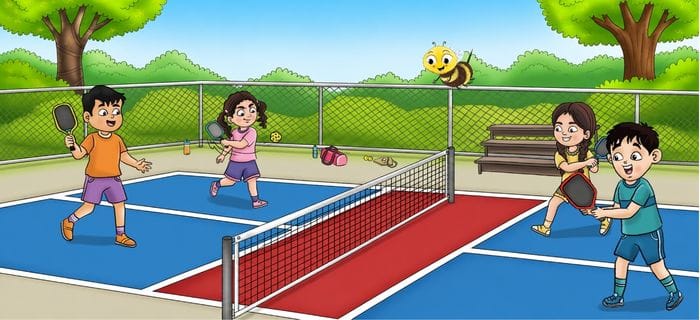
In The Racquet Racket, the first story in Gender Parity Book 1, Deepak and Rajul dismiss Avantika as a potential pickleball player for one reason—she’s a girl.
Their argument is that boys are stronger, therefore Avantika cannot possibly be as good at sport.
Biplob points out the obvious problem. Pickleball isn’t weightlifting or wrestling. It requires a combination of skills, and Avantika could therefore be as good as—or better than—the boys.
This is a useful question to bring into everyday parenting:
What does this activity actually require?
If it requires speed, look for speed.
If it requires patience, look for patience.
If it requires creativity, coordination, strength, empathy or problem-solving, look for those abilities.
Gender is relevant far less often than stereotypes would have us believe.
Give Them the Opportunity First
We can reinforce this quite easily at home.
Offer daughters the cricket bat and sons the cooking spoon.
Let both try building things.
Let both care for pets.
Let both paint, run, climb, bake, calculate, fix and create.
Then watch what happens.
This doesn’t mean your daughter must enjoy cricket or your son must enjoy cooking.
In fact, forcing children towards supposedly unconventional choices merely to demonstrate our progressive parenting rather misses the point.
The opportunity should be gender neutral. The choice can be completely individual.
That’s the Each Unique part of Girls = Boys, Each Unique.
Equal Participation Matters Too
Opportunity is only the first step.
Children also absorb ideas about gender from the roles they see people performing.
Who cooks at home?
Who cleans?
Who fixes things?
Who handles money?
Who cares for children?
Who gives instructions?
Who follows them?
In Sweep and Mop, the second story, Ritika puts all four children through pickleball training. Adi and Riya sweep the court while Avantika and Asif mop it.
Boy and girl sweeping.
Girl and boy mopping.
Nobody gets a gender-specific job because there isn’t one.
More subtly, Ritika herself is the expert coach. She designs the children’s training, directs their exercises and pushes them to improve their endurance, coordination and court coverage.
There is no announcement about female empowerment.
She simply knows what she’s doing.
And that is often far more powerful.
Let Equality Become Ordinary
Perhaps this is where we sometimes go wrong.
We make gender equality an event.
Look! A woman pilot!
Look! A man cooking!
Look! A girl playing cricket!
Except the eventual objective should surely be that children don’t find any of these things particularly remarkable.
A pilot is flying the plane.
A parent is making dinner.
A child is playing cricket.
Job done.
At home, that means allowing children to see responsibilities shared according to ability, interest and circumstance rather than rigid rules.
Dad can cook.
Mum can fix something.
Or Mum can cook because she’s brilliant at it while Dad remains a danger to saucepans everywhere.
The important lesson isn’t that everybody must perform identical roles.
It is that gender isn’t automatically deciding them.
Then Comes the Harder Part: Recognising Merit
There’s another stage to genuine equality.
What happens when someone of another gender is actually better than you?
That’s where True Leadership, the third story, takes the idea.
The children reach the decisive pickleball game and need to choose two players.
They don’t select Adi and Asif simply because they’re boys.
They look at how everyone is playing.
Riya has a terrific backhand. Avantika’s speed and court coverage are excellent. Together, the girls are the team’s strongest combination for that match.
So they play.
And the boys cheer them on.
This is an enormously important part of gender parity.
Equality isn’t about ensuring girls always win.
It is about creating circumstances in which the best person can succeed without gender putting a thumb on the scales.
Sometimes that person will be a girl.
Sometimes a boy.
That’s precisely the point.
Teach Children to Ask “Who Is Best for This?”
This is a useful habit far beyond the pickleball court.
Who should lead the school project?
Who understands the problem best?
Who is most organised?
Who can carry this?
Who is best at explaining something to the younger children?
Instead of automatically looking towards a boy or girl, encourage children to consider the qualities the task requires.
It also teaches something deeper about leadership.
A good leader doesn’t need to be the person doing everything.
Sometimes leadership means recognising:
“You’re better at this. You should do it.”
In True Leadership, Biplob congratulates Adi and Asif after the girls win the decisive game precisely because they supported the best players rather than assuming the boys should play.
That’s confidence without ego.
Not a bad lesson for adulthood either.
Why We Use Stories to Teach Gender Parity
Of course, we could explain all this to children directly.
We could sit them down and talk about stereotypes, equal participation, merit-based inclusion and gender-neutral opportunity.
We could probably produce a PowerPoint presentation too.
I suspect most children would suddenly remember some urgent homework.
Stories work differently.
In Gender Parity Book 1, the children aren’t attending lessons on equality.
They’re trying to make a pickleball team.
They practise. They tease one another. They get tired. They argue. They face rivals. They win and lose points.
And woven through those adventures are three ideas:
Don’t underestimate someone because of gender.
Don’t assign roles because of gender.
And when it matters, choose ability rather than gender.
The stories entertain first.
The lesson emerges from what happens.
That’s how we approach learning across the Biplob Books Series—because children are far more likely to remember an idea when they’ve discovered it through characters they care about.
Girls = Boys. Each Unique.
Ultimately, gender parity isn’t about raising boys and girls who are identical.
What a terribly boring world that would be.
It’s about raising children who recognise differences without turning those differences into unnecessary limitations.
Give them opportunities.
Expect everyone to contribute.
Encourage them to develop their individual strengths.
And when it comes time to choose, look at ability, effort and merit.
Not gender.
The three stories in Girls = Boys, Each Unique – Gender Parity Book 1 approach those ideas from different directions, but they arrive at the same place.
Every child deserves a fair chance to discover what they’re capable of.
Our job is not to decide the answer beforehand.
Sometimes all we really need to do is hand them the racquet—and get out of the way.
FAQs
What is gender parity for children?
Gender parity means ensuring boys and girls receive equitable opportunities to participate, learn, contribute and lead without gender stereotypes unnecessarily restricting their choices.
Does gender equality mean boys and girls are the same?
No. Gender equality does not mean biological or individual sameness. It means differences should not automatically determine a child’s opportunities or roles.
How can parents teach gender equality at home?
Offer sons and daughters varied experiences, share household responsibilities without rigid gender labels and encourage children to judge people’s abilities based on relevant skills rather than assumptions about gender.
Why are stories useful for teaching gender parity?
Stories allow children to experience ideas through characters, conflicts and consequences. The three stories in Biplobworld’s Girls = Boys, Each Unique – Gender Parity Book 1 explore stereotypes, equal participation and merit-based leadership through an entertaining pickleball adventure rather than formal lessons.
What are the three key gender-parity lessons in Book 1?
The book progresses through three connected ideas: challenge gender stereotypes, encourage equal participation in roles, and recognise merit and leadership regardless of gender. These are explored respectively through The Racquet Racket, Sweep and Mop and True Leadership.