
How to Care for a Dog: Practical Pet Care Tips for Families and Children
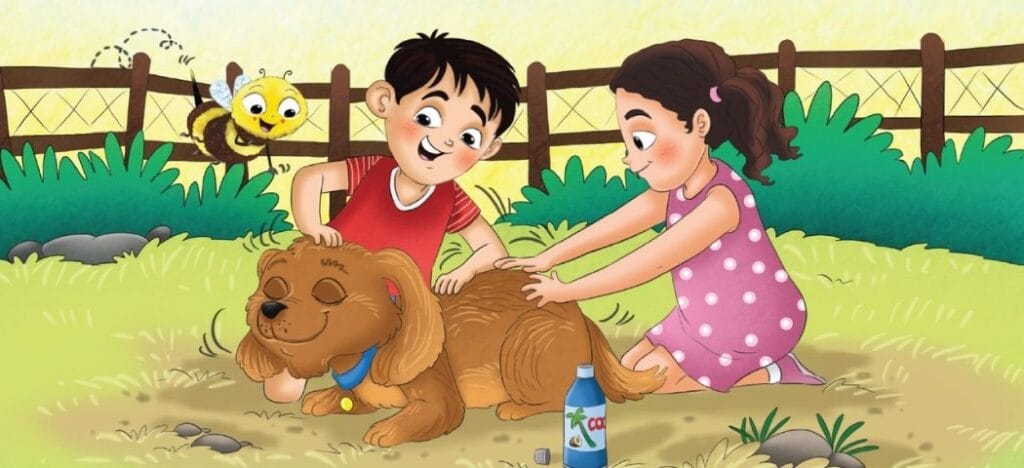
Once you’ve got a dog home as a pet, she depends on you for her physical and emotional well-being.
Like we discussed in an earlier blog on choosing the right dog breed for your family, dogs are pack animals and will look up to you as the leader of the pack. This means she expects you to provide the love, protection, discipline, routine and care she needs.
choosing the right dog breed for your family
The good news is that dog care is not complicated. It does, however, require consistency. A dog needs clean surroundings, fresh water, proper food, exercise, grooming, socialising, regular vet checks and plenty of affection.
With a little planning, this is something that you can easily manage, so long as you take care of a few key points.
Quick answer: how do you care for a dog at home?
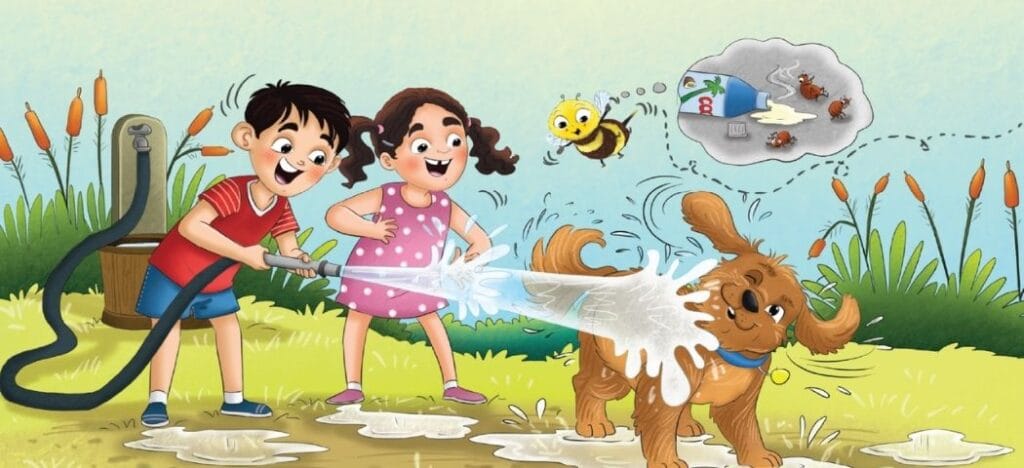
To care for a dog at home, keep her surroundings clean, give her fresh water daily, feed her a balanced diet, provide regular exercise, groom her, socialise her safely, train her with patience, and take her for routine vet check-ups. A dog also needs love, attention and family time to stay emotionally healthy.
This is particularly important when children are involved. A family dog can teach children responsibility, empathy, routine and care, but adults must lead the process. Children can help with age-appropriate tasks, but the dog’s well-being remains the parent’s responsibility.
1. Cleanliness
Remember when your child was a toddler and you’d have to ensure that there was absolutely nothing on the floor that she could pick up and put in her mouth?
Well, it is more or less the same with your dog.
Be it footwear, toys or even the furniture — your dog will chew on all of it for the first three to six months. While this helps her during the teething process, it also goes a long way in strengthening her jaws and providing exercise and stimulation.
So get her a ball and other chewing toys. There are quite a few safe, inexpensive options available in the market. Ensure your home is clean, especially the floor. This is not just about neatness; it is about pet safety at home.
A puppy will not know the difference between a chew toy, a slipper, a child’s plastic toy, a sock, a pencil or something dangerous. For her, everything is research.
Unfortunately, her mouth is the laboratory.
Additionally, you may want to identify a place for the dog to rest. This should be clean, airy — not a closet! — and comfortable. Dogs need a space where they can settle down, feel safe and rest without being constantly disturbed.
This is especially important when there are children at home. Children must be taught that the dog’s resting place is not a wrestling arena, reading corner, toy dump or secret hideout.
The dog needs her own space too.
Dog care tip for families with children
If you have children at home, involve them in simple cleanliness routines.
They can help keep their toys away from the dog, put the dog’s toys in one place, refill the water bowl under supervision, or remind everyone not to leave small objects lying around.
These little things teach pet care for kids in a practical way. Children begin to understand that caring for a dog is not only about cuddles and play. It is also about keeping the home safe for the dog.
2. Food and water
I know several people who feed their dogs three or even four times a day. Pretty much whenever they have a meal — which is at least thrice a day — the dog too is fed.
This is catastrophic.
Your dog needs to eat just once a day, or at the very most, you can split that up to twice a day. Sure, you can give her a treat every other day, but as far as meals go, once or twice is sufficient.
That said, every dog is different. The right feeding schedule depends on your dog’s age, breed, size, activity level and health. Puppies, for example, may need more frequent meals than adult dogs. Older dogs or dogs with health conditions may need a specific diet recommended by a vet.
So, while you should avoid overfeeding, do check with your vet for the best routine for your dog.
The thing you shouldn’t scrounge on is water.
Always ensure her bowl is cleaned and filled with fresh water to drink. A hydrated dog on a good diet is the secret to a healthy and happy companion!
Also, avoid feeding dogs random scraps from your plate. What is harmless for humans may not always be good for dogs. Some foods can upset their stomach, and some can be dangerous. When in doubt, ask your vet.
A dog may look at you with great emotional intensity while you eat. This does not mean she needs your samosa.
It means she has mastered negotiation.
Simple feeding responsibilities children can help with
Children can participate in food and water routines, but only under adult supervision.
They can:
- Check whether the water bowl is full
- Help clean the water bowl
- Remind the family about feeding time
- Help place the bowl down after an adult has measured the food
- Learn which foods are not safe for dogs
These small routines help in teaching responsibility to children. They learn that caring for a dog means consistency, not just affection.
3. Touch and feel discipline
When you’ve got your pup home, for the first three weeks, do the following every day.
Put her on the ground and touch her everywhere, including inside the mouth, between the toes, inside her ears, on the tummy, and so on — without hurting her, of course.
Place her food in her bowl, but don’t allow her to eat until you tell her it is fine to eat. This will take some patience to enforce, but it is worth doing. While she is eating, take the bowl away for a couple of minutes from under her mouth, and then give it back to her.
Give her a treat, ball or other toy, and then take it from her mouth. Be gentle, but wedge it out if you have to. After a couple of minutes, give it back to her.
This isn’t an exercise in being sadistic. It is essentially preparing your dog for life with your family.
By touching her, you are establishing that it is fine if your child, or anyone else for that matter, touches her anywhere, and it is not a reason for her to snap at them. Same for the food — you are establishing that you’re the boss, which is very important to do and enforce discipline.
Then there is of course the added benefit that later in life, if someone touches her accidentally while feeding, she won’t attack them.
With love and patience, you will have a wonderful dog that listens to you — most of the time, that is!
Dog training should always be gentle
A word of caution — no matter what, don’t hit the poor creature. Not even with a rolled-up newspaper.
Dogs are very intelligent and want to please you. So if you aren’t able to get her to do what you want, the fault probably lies with you. And if you have an impulse to use that rolled-up newspaper, simply go ahead and give yourself a good whack on the head!
With dogs, rewards work better than punishment. Reward her with a small treat or lavish praise for good behaviour or doing what you want, and it is a lesson she will remember for life.
This is an important part of dog training for families. Children must also learn this early. They should never shout at, hit, scare, chase or tease the dog. They must be taught to be gentle, calm and respectful.
A dog can teach children empathy, but only if adults teach children how to behave with the dog.
Respect goes both ways.
Stories can help children understand care and discipline
Children often understand responsibility better through stories than lectures.
A book like Detective Col. Zoro can introduce children to the world of dogs through mystery, observation and adventure. It can help them see dogs as intelligent, feeling beings with habits, moods and personalities.
Similarly, Adventures of Biplob the Bumblebee can help children develop empathy for nature and living beings. These values naturally extend to caring for pets.
This is where story-based learning becomes useful. Before children learn to care for a dog in real life, stories can help them understand kindness, patience, observation and responsibility.
Detective Col. Zoro
Adventures of Biplob the Bumblebee
story-based learning
4. Exercise
Irrespective of the breed, every dog should be walked at least thrice a day, if not more, for about 20 minutes or so. This is great exercise and stimulation for the dog.
In addition, certain breeds will require more exercise, and you could play games like fetch, which they thoroughly enjoy.
Coupled with a good diet, exercise will ensure your dog’s health, both physical and mental.
A walk is not only about emptying the bladder. Though, let’s be honest, that is a major part of it.
A walk gives the dog exercise, stimulation, smells, sounds, social exposure and a change of environment. For dogs, sniffing around is not time waste. It is reading the newspaper.
For families, dog walks can also become a lovely routine. Children get outdoor time. Parents get movement. The dog gets exercise. Everyone gets a break from screens.
In a world where children spend increasing time indoors, a dog can become a wonderful reason to step outside.
Speaking of dogs and problem-solving, if you have kids at home, they might enjoy reading about canine adventures in Detective Col. Zoro, where a clever dog detective solves mysteries. It is a fun way to build their love for animals and reading!
Exercise ideas for dogs and children
Dog exercise can also become family bonding time.
Children can join adults for walks, throw a ball under supervision, help set up simple fetch games, or accompany the dog to a safe open space.
Some simple activities include:
- Short family walks
- Fetch with a soft ball
- Tug games with safe dog toys
- Gentle running in a safe space
- Basic training games such as sit, stay and come
- Hide-and-seek with treats or toys
These activities help the dog stay active and give children screen-free play with a living companion. They also build confidence, patience and responsibility.
Of course, the child and dog should always be supervised. Enthusiasm can run high on both sides.
5. Grooming
Depending on the breed and the climatic conditions of where you live, bathe your dog with good quality, chemical-free herbal shampoo at least once, or ideally twice a week.
For instance, we have an English Cocker Spaniel and we live in Mumbai. Given the breed and weather, we find that he needs a bath once every four days.
Check with your vet what the ideal bathing interval is for your dog, and stick to it.
Irrespective of the bathing interval, ensure that you brush her coat every day to keep it fresh and odour-free. What’s more, your dog will also love getting her coat brushed, and it is a great exercise for kids to bond with the pet, be responsible and care for someone!
Besides these, check on the state of her teeth and gums regularly. There are quite a few good quality products in the market that your dog can chew on for optimum dental hygiene, and you can ask your vet to recommend the ideal one.
Grooming as a child-friendly responsibility
Grooming is one of the easiest ways for children to participate in dog care.
A child can help brush the dog gently, hand over the towel after a bath, help arrange grooming items, or simply sit nearby and talk to the dog while an adult handles the main work.
This helps children learn that care is not a one-time emotion. It is a repeated act.
It also helps them observe the dog closely. They may notice if the dog has a scratch, bad odour, discomfort, a sore paw or something unusual. This is a useful way to build attentiveness and empathy.
That said, children should not be left to groom the dog unsupervised, especially if the dog is nervous, injured or not used to being handled.
As always, adults must lead.
6. Socialising
From the start, get your dog to meet other dogs in a safe environment. This will get her to be sociable and tone down aggressive behaviour, if any.
Likewise, you need to spend time with your dog.
Try and walk her at least once a day, or every other day if you can. Pet her, talk to her — yes, you can talk to her — and generally make her feel loved.
Not only is this great for your dog, you will be amazed at the wonders it does for your health too!
Socialising is not only about meeting other dogs. It is also about helping your dog get used to people, sounds, movement, children, vehicles, grooming, vet visits and everyday life. A well-socialised dog is usually calmer, more confident and easier to manage.
But socialising must be done carefully.
Do not throw your puppy into overwhelming situations. Start slowly. Let her meet friendly dogs and calm people in safe spaces. Watch her body language. If she is scared, don’t force it.
Confidence grows best when it is not rushed.
Children and dog socialisation
Children should also learn how to behave around other dogs.
They must ask before petting someone else’s dog. They should not run screaming towards a dog, pull its tail, grab its face, disturb it while eating, or assume every dog wants to be hugged.
This is important pet safety for children.
A family dog can make children more confident around animals, but confidence should never become carelessness. Teach children to observe first, ask permission and approach gently.
These are life lessons too.
7. Regular checks
It is a good idea to take your dog for regular routine check-ups to the vet, say once every six months or so.
Simultaneously, you should regularly check on her physical health too. This involves checking her for injuries or any other anomaly like bad odour, discoloration and so on.
Pay attention to:
- The ears — there should be no discharge, malodour or visible injuries
- Teeth and gums
- Claws and paws
- Coat and skin
- Eyes
- Energy levels
- Appetite
- Walking pattern
This is especially true if you live in an area where your dog spends time in gardens and lawns where she could pick up worms or other “unwanteds”!
A dog cannot always tell you something is wrong. You have to notice.
If she suddenly stops eating, becomes unusually quiet, limps, scratches constantly, smells different or behaves strangely, do not ignore it. A quick vet check is always better than waiting too long.
A simple dog care routine for families
A basic dog care routine can make life easier for everyone.
Daily:
- Fresh water
- Proper meals
- Walks and exercise
- A clean resting space
- Some play and affection
- Quick observation of mood and energy
Weekly:
- Brushing and grooming
- Cleaning bedding
- Checking ears, paws and coat
- Reviewing food, treats and toys
Every few months:
- Routine vet check-up
- Vaccination or deworming schedule as advised
- Grooming review
- Diet review if needed
This kind of routine helps children too. They begin to see that care is built into daily life, not remembered only when convenient.
Where Biplob World fits in
At Biplob World, we believe children learn best through stories, curiosity and joyful discovery.
Caring for a dog is not only about pet care. It is about empathy, observation, responsibility and kindness. These are values children often understand better through stories and play.
Books like Detective Col. Zoro can encourage children to observe, think and engage with the world of dogs through mystery-led storytelling. Adventures of Biplob the Bumblebee can help children develop kindness towards nature and living beings. Story-based jigsaw puzzles, colouring books, board games and card games can extend these values into screen-free, hands-on learning.
Stories do not replace real pet care.
But they can prepare children for it.
Biplob World
Detective Col. Zoro
Adventures of Biplob the Bumblebee
story-based jigsaw puzzles
Explore story-led learning with Biplob World
Want to help children learn care, responsibility and empathy through stories?
Explore Biplob World’s collection of:
- Detective Col. Zoro books
- Adventures of Biplob the Bumblebee
- Story-based jigsaw puzzles
- Colouring books for kids
- Board games and card games
- STEM.org certified DIY kits
Each product is designed to help children imagine, observe, solve, create and learn — one story at a time.
Explore Story-Based Learning Products
The bottom line
Like we said, caring for your dog is not just very easy, but also extremely rewarding and satisfying in itself.
If nothing else, it will give you the joy of having a healthy and happy pet for a companion.
A dog cared for well brings more than affection into a home. She brings routine, laughter, outdoor time, responsibility, warmth and a kind of companionship that is difficult to describe until you have experienced it.
Children who participate in dog care learn something very important: love is not only what we feel. Love is what we do.
Every day.
FAQs on How to Care for a Dog
How do you care for a dog at home?
To care for a dog at home, provide clean surroundings, fresh water, proper food, regular walks, grooming, socialisation, gentle training, affection and routine vet check-ups.
How often should a dog be walked?
Most dogs should be walked at least two to three times a day, though the exact amount depends on breed, age, health and energy level. Active breeds usually need more exercise.
What should children do to help care for a dog?
Children can help with simple tasks such as filling the water bowl, putting toys away, brushing gently under supervision, joining walks with adults and helping keep the dog’s space clean.
How often should you groom a dog?
Grooming depends on the breed, coat type and climate. Many dogs benefit from regular brushing, while bathing frequency should be decided with advice from a vet.
How do you train a dog without punishment?
Train a dog with patience, consistency, rewards, praise and clear routines. Hitting, shouting or frightening a dog is harmful and usually counterproductive.
Why is socialising important for dogs?
Socialising helps dogs become calmer, more confident and better behaved around people, other dogs and everyday situations. It should be done gradually and safely.
How often should a dog visit the vet?
Routine vet check-ups every six months are useful for many dogs, though puppies, senior dogs or dogs with health issues may need more frequent visits.
How can stories help children learn pet care?
Stories help children understand kindness, observation, care and responsibility. Books like Detective Col. Zoro and Adventures of Biplob the Bumblebee can introduce children to empathy for animals and living beings.