Best Adventure Books for 7-Year-Olds: How Stories Build Imagination, Reading Confidence and Curiosity
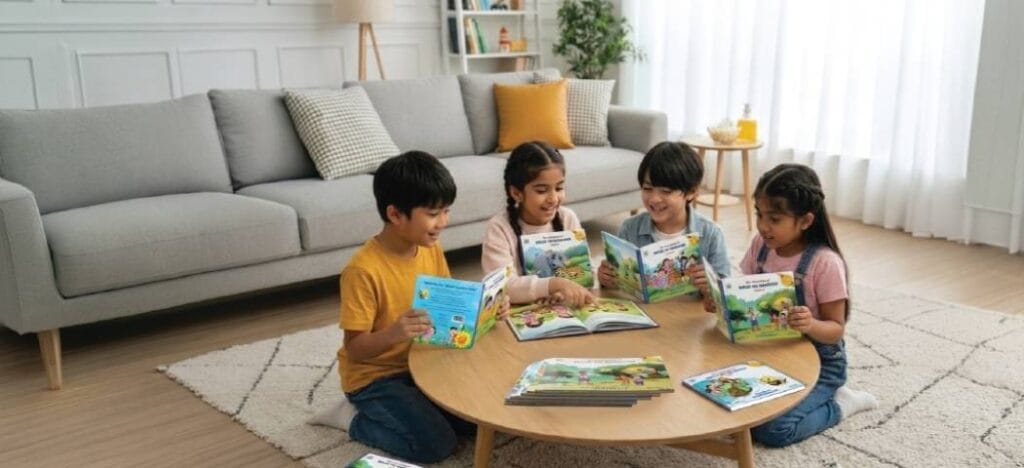
There comes a lovely age in every child’s reading journey when picture books begin to share space with longer stories.
For many children, that age is around seven.
The child is still young enough to love illustrations, animals, humour and wonder. But she is also ready for stories with more plot, more characters, more questions and more adventure. This is when the right book can quietly change everything.
A child who once read only because a parent insisted may suddenly ask for “one more chapter.”
That, to my mind, is when the magic begins.
The best adventure books for 7-year-olds are not necessarily the longest books, the most famous books or the ones adults remember from their own childhood. They are the books that make children curious. They make children turn the page. They make them wonder what happens next.
And if the story also helps children think about nature, kindness, courage, problem-solving, friendship, responsibility and the world around them, even better.
Adventures of Biplob the Bumblebee
Quick answer: what are the best adventure books for 7-year-olds?
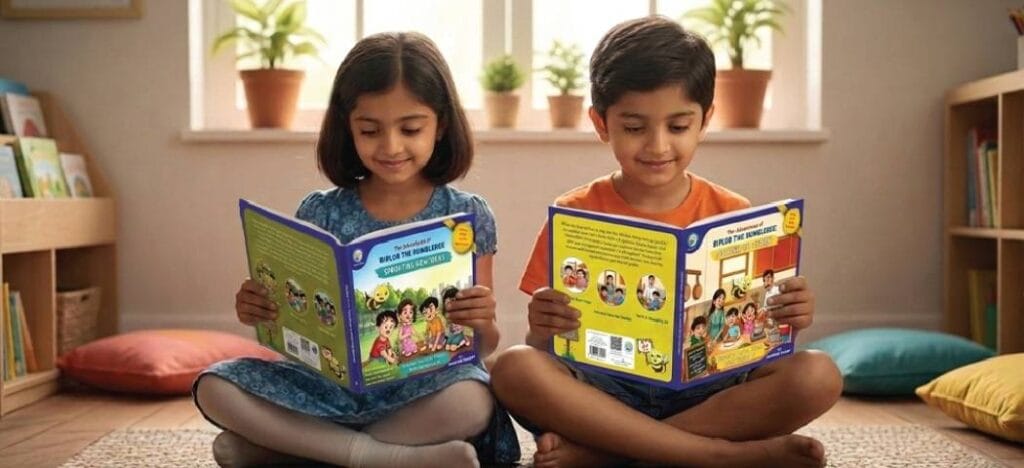
The best adventure books for 7-year-olds are stories with simple language, short chapters, memorable characters, illustrations, humour, mystery, emotional warmth and a strong sense of discovery. For young readers, Adventures of Biplob the Bumblebee is a strong choice because it combines adventure, nature, kindness, sustainability and age-appropriate storytelling.
For children who are just entering chapter books, the ideal story should not feel like homework. It should feel like an invitation.
A character to follow.
A problem to solve.
A world to enter.
A reason to keep reading.
That is what good adventure stories do.
Why adventure books work so well at age seven
Seven-year-olds are at an interesting stage.
They are old enough to follow a story across chapters, but young enough to need pace, warmth and visual imagination. They enjoy jokes, animals, mysteries, danger that is not too frightening, and characters who feel brave even when they are small.
Adventure books work beautifully because they give children movement.
Something happens.
Someone has to act.
A problem appears.
A friend helps.
A mistake is made.
A solution is found.
A journey changes the character.
This keeps children engaged.
More importantly, it helps them build reading stamina without realising it. A child who wants to know what happens next will read more willingly than a child who has simply been told that reading is “good for you.”
Which, while true, is not exactly exciting.
What makes a good chapter book for a 7-year-old?
Not every book that is labelled suitable for children will suit every child.
A good chapter book for a 7-year-old should usually have:
- Short, manageable chapters
- Simple but rich language
- A clear central character
- A story that moves forward quickly
- Some illustrations or strong visual scenes
- Humour or emotional warmth
- A sense of adventure, mystery or discovery
- Values woven into the story, not delivered as a lecture
- Enough challenge to build confidence without causing frustration
At this age, confidence matters as much as vocabulary.
A child who feels successful while reading is far more likely to continue reading. That is why early chapter books must be chosen carefully. If the book is too easy, the child may lose interest. If it is too hard, she may give up.
The right book sits in that happy middle.
Challenging enough to feel grown-up.
Simple enough to feel enjoyable.
Why story-led adventure is better than moral instruction
Children do not enjoy being lectured.
To be fair, neither do adults.
If we want children to learn courage, empathy, responsibility, environmental awareness or kindness, stories are often more effective than direct instruction. A story allows a child to experience a value rather than merely hear about it.
A child may not want a lecture on sustainability.
But she may happily follow a bumblebee through an adventure and discover why flowers, bees, trees and clean surroundings matter.
A child may not want a lecture on kindness.
But she may remember a character who helped someone smaller, weaker or different.
A child may not want to be told to observe nature.
But she may begin noticing bees, leaves, flowers and insects after meeting them in a story.
That is the quiet power of story-based learning.
Adventures of Biplob the Bumblebee
Adventures of Biplob the Bumblebee: an adventure book with nature at its heart
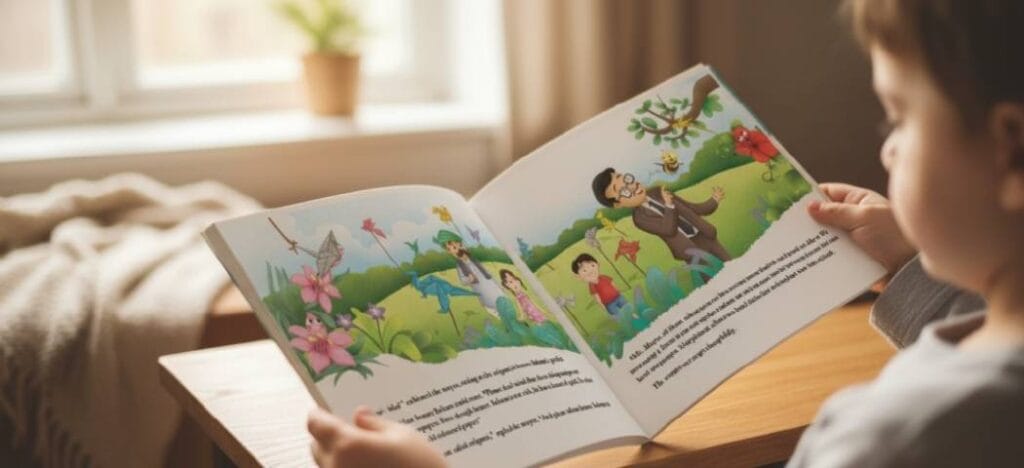
Adventures of Biplob the Bumblebee is built around a simple but powerful idea: children learn best when curiosity leads the way.
Biplob gives young readers a character they can follow into the natural world. Through his adventures, children encounter friendship, kindness, courage, problem-solving and care for the environment. The stories are approachable for young readers and meaningful enough for parents who want more than just entertainment.
What makes Biplob especially useful for 7-year-olds is that it does not treat learning and fun as separate things.
The adventure carries the learning.
Children meet a character. They follow the story. They enjoy the journey. Along the way, they begin to understand nature, pollination, teamwork, empathy and small acts of responsibility.
That is exactly how learning should feel at this age.
Natural.
Joyful.
Unforced.
Adventures of Biplob the Bumblebee
Adventure books can introduce children to nature without making it heavy
Children today are growing up with words like climate change, pollution, biodiversity and sustainability around them.
These are big ideas.
Too big, sometimes, for a young child if presented coldly.
But nature-led adventure stories offer a gentler way in. A bee looking for flowers can lead to a conversation about pollination. A forest scene can lead to a question about trees. A problem in nature can lead to a discussion about care, waste or responsibility.
That is why books like Adventures of Biplob the Bumblebee are useful beyond reading practice. They help children begin to see the natural world as connected.
A bee is not just a bee.
A flower is not just a flower.
A garden is not just a garden.
Everything has a role.
Once children see that, environmental awareness begins naturally.
Adventures of Biplob the Bumblebee
Reading should not end when the book closes
One of the best ways to make reading more meaningful for children is to extend the story beyond the page.
Some children read a book and move on. Others want to stay inside the world a little longer. At seven, this is especially valuable because children learn through many forms — reading, drawing, colouring, solving, building, pretending and playing.
After reading a Biplob story, a child can colour a favourite character, solve a story-based jigsaw puzzle, play a related board game or build something with a STEM.org certified DIY kit.
The story becomes a doorway.
A book builds imagination.
A puzzle builds patience.
A colouring book builds focus.
A board game builds decision-making.
A DIY kit builds problem-solving.
Together, they create a richer reading experience.
Colouring a Favourite Character
Story-based Jigsaw Puzzle
Board Games Collection
STEM.org Certified DIY Kits Collection
Why screen-free reading matters
There is nothing wrong with children watching a good story on screen occasionally.
But reading asks something different of them.
When a child reads, she has to imagine. She has to build the scene in her mind. She has to follow the sequence. She has to listen to the rhythm of language. She has to sit with the character long enough to care.
This is why screen-free reading matters.
It slows children down in the best possible way.
At seven, children are still developing attention, vocabulary, comprehension and emotional understanding. Books, puzzles, colouring pages, board games and DIY kits give them a chance to engage actively rather than passively.
They do not just watch the story.
They participate in it.
Biplob Books
Story-based Jigsaw Puzzles
Colouring Books
Board Games
STEM.org Certified DIY Kits
How adventure stories build reading confidence
Reading confidence is not built by forcing children through difficult books.
It is built by giving them stories they want to finish.
Adventure books are useful because they create momentum. A child wants to know whether the character succeeds. She wants to know what happens after the problem appears. She wants to find out whether the friend returns, the mystery is solved, the journey ends safely or the small hero proves everyone wrong.
This forward pull helps children keep reading.
And the more they read, the more fluent they become.
This is especially important for children who are moving from picture books to chapter books. The jump can feel big. But if the chapters are short, the story is exciting and the character is memorable, the child begins to feel capable.
That feeling matters.
A confident reader reads more.
A child who reads more imagines more.
A child who imagines more asks better questions.
And asking better questions is the beginning of all learning.
How adventure books support emotional intelligence
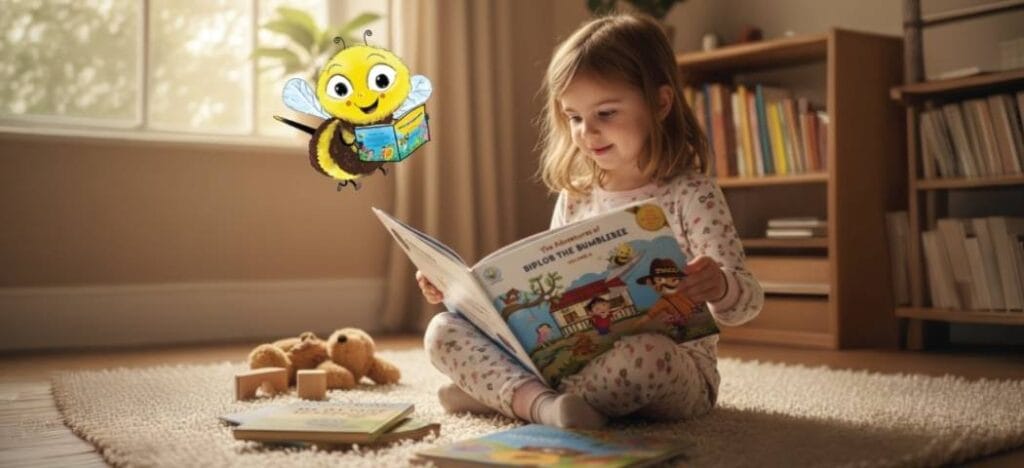
A good adventure book is not only about action.
It is also about feelings.
Children watch characters feel afraid, try again, help a friend, make mistakes, feel guilty, show courage, solve problems and discover something about themselves.
This helps young readers understand emotions in a safe way.
They can ask:
Why did the character help?
Why was the friend upset?
Was that a brave choice?
What would I have done?
How did the problem get solved?
This is one reason story-led books are so valuable. They help children practise empathy without turning it into a lesson.
When a child follows Biplob helping others or caring for nature, she is not merely reading about a bumblebee. She is also learning to notice, care and act.
Adventures of Biplob the Bumblebee
How to choose adventure books for your child
The best book is not always the book everyone else is reading.
The best book is the one your child will actually read.
When choosing adventure books for kids, ask:
- Is the language age-appropriate?
- Are the chapters short enough?
- Does the story move quickly?
- Is there humour, warmth or wonder?
- Does the book have a character your child can care about?
- Are there values woven into the story?
- Can the story lead to conversation or activity?
- Will the book make the child want to read more?
For a 7-year-old, books with animals, nature, mystery, friendship and gentle adventure often work very well. They feel exciting without being overwhelming.
That is also why a story world that continues through puzzles, colouring books, games and DIY activities can be especially useful.
It lets the child stay with the story in different ways.
Biplob Books Collection
Story-based Jigsaw Puzzles
Colouring Books
How parents can encourage 7-year-olds to read more
Parents often ask how to build a reading habit.
The answer is not to announce, “From today, you will read every evening for exactly thirty minutes.”
That may work for a day. Possibly two, if the child is unusually cooperative.
A better approach is to make reading enjoyable and visible.
Read the first chapter together
If your child is hesitant, begin together. Once the story has started, curiosity often does the rest.
Let the child choose
Offer two or three books and let your child pick. Choice creates ownership.
Keep books within reach
A book that is visible is more likely to be picked up than one buried in a shelf.
Talk about the story
Ask simple questions. Who was your favourite character? What surprised you? What do you think happens next?
Extend the story
Let your child colour a character, solve a puzzle, play a game or build something connected to the theme of the book.
Avoid making reading a punishment
Reading should not become what children are made to do after losing screen time. It should feel like a pleasure, not a penalty.
Colour a Character
Solve a Puzzle
Play a Game
Build Something
Adventure books and hands-on learning make a powerful pair
Some children love to sit and read for long stretches.
Many do not.
That is perfectly fine.
At seven, children are still learning through movement, play, art, conversation and hands-on exploration. So instead of treating reading as separate from play, it helps to connect the two.
Read a story.
Colour a scene.
Solve a puzzle.
Play a game.
Build a model.
Act out a character.
Ask a question.
This makes the story more memorable.
A book gives the child language and imagination. A puzzle gives structure and patience. A colouring book gives focus and expression. A board game gives decision-making. A DIY kit gives problem-solving.
Together, they help children learn with their eyes, hands, minds and hearts.
Biplob Books
Story-based Jigsaw Puzzles
Colouring Books
Board Games
STEM.org Certified DIY Kits
Why Biplob works well for young readers
Biplob works because he gives children a small hero in a large world.
That matters.
Children do not always need grand battles and enormous kingdoms. Sometimes, they need a character small enough to feel familiar, but brave enough to make a difference.
A bumblebee is a wonderful guide for a child. It is small, active, close to nature and full of possibility. Through Biplob, children can explore friendship, care, courage and environmental awareness without the story feeling heavy.
This is the kind of adventure that suits a 7-year-old beautifully.
It is exciting, but not frightening.
Meaningful, but not preachy.
Simple, but not shallow.
That balance is not easy to find.
Adventures of Biplob the Bumblebee
A good reading journey starts with the right story
A child’s reading journey does not begin with a reading level.
It begins with interest.
The right story can turn reading from a task into a habit. The right character can make a child return to a book again and again. The right adventure can make a young reader feel that books are not just objects on a shelf, but doors into other worlds.
For a 7-year-old, that matters more than we sometimes realise.
Because once a child discovers the joy of reading, the benefits follow naturally — vocabulary, comprehension, imagination, patience, empathy, curiosity and confidence.
The goal is not to rush children into serious reading.
The goal is to help them fall in love with stories.
And if a bumblebee can help them do that, all the better.
Explore adventure books and story-based activities
Looking for adventure books and screen-free activities that help children read, imagine and learn?
Start with:
- Adventures of Biplob the Bumblebee
- Biplob books
- Story-based jigsaw puzzles
- Colouring books for kids
- Board games
- STEM.org certified DIY kits
Each one gives children a different way to enter a story — through reading, solving, colouring, playing, building and discovering.
Explore Biplob Books and Story-Based Activities
FAQs on Adventure Books for 7-Year-Olds
What are the best adventure books for 7-year-olds?
The best adventure books for 7-year-olds are stories with simple language, short chapters, memorable characters, humour, illustrations and a strong sense of discovery. Adventures of Biplob the Bumblebee is a strong choice for children who enjoy nature, kindness and meaningful adventure.
Adventures of Biplob the Bumblebee
What makes a good chapter book for a 7-year-old?
A good chapter book for a 7-year-old should have manageable chapters, age-appropriate language, a clear story, engaging characters, humour, warmth and enough adventure to keep the child turning pages.
Are adventure books good for young readers?
Yes, adventure books are excellent for young readers because they build imagination, vocabulary, reading confidence, curiosity, empathy and problem-solving skills.
Why is Adventures of Biplob the Bumblebee good for 7-year-olds?
Adventures of Biplob the Bumblebee is good for 7-year-olds because it combines adventure, nature, kindness, sustainability and engaging storytelling in a way young readers can understand and enjoy.
How can parents encourage 7-year-olds to read chapter books?
Parents can encourage chapter-book reading by reading together, letting children choose books, keeping books visible, starting with short chapters and extending stories through puzzles, colouring, games and hands-on activities.
What are good screen-free activities after reading?
Good screen-free activities after reading include drawing favourite scenes, colouring characters, solving story-based puzzles, playing board games, acting out chapters and building with DIY kits.