
Raising Capable Kids: Why Life Skills Shouldn’t Have a Gender
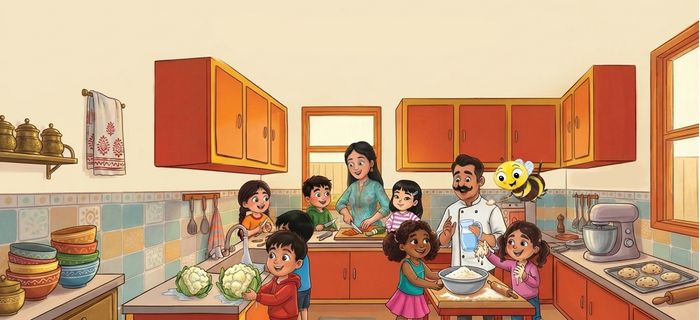
There are many things we hope our children will be able to do when they grow up.
Find work they enjoy.
Manage money sensibly.
Look after themselves.
Make good decisions.
Perhaps even remember to call their parents occasionally.
Somewhere on that list should probably be something considerably less ambitious.
Feed themselves.
And while we’re there, wash their clothes, keep their surroundings reasonably clean, organise the everyday business of living and know what to do when something goes wrong.
Because eventually, the child who currently asks where the cereal is while standing directly in front of it will have to manage without us.
That’s what makes practical life skills for kids so important.
They’re not really about producing perfectly folded clothes or restaurant-quality dinners.
They’re about something much simpler.
Being able to get on with life.
And yet, somewhere along the way, we’ve managed to attach gender to a surprising number of these ordinary skills.
Cooking and cleaning became women’s work.
Repairs and tools became men’s work.
Caregiving wandered in one direction.
Technical and practical jobs wandered in the other.
Which is rather odd when you think about it.
A saucepan has never shown much interest in the gender of the person holding it.
Neither, as far as I’m aware, has a screwdriver.
So perhaps the more interesting question isn’t whether boys and girls can learn the same skills.
It’s why we ever decided some of those skills belonged to one of them in the first place.
That’s some of the territory explored in Girls = Boys, Each Unique – Book 3.
Quick Answer: Why Should Life Skills Be Gender Neutral?
Because most everyday skills are simply useful things to know.
Cooking, cleaning, organising, caring for yourself and dealing with ordinary practical problems help children become more capable and independent.
Children won’t necessarily enjoy the same things or become equally good at them. That’s hardly the point.
The opportunity to find out, though, doesn’t need to depend on whether they’re a boy or a girl.
Independence Doesn’t Arrive on Your 18th Birthday
We sometimes talk about children becoming independent as though it’s something that happens naturally with age.
Childhood.
Teenage years.
Eighteen.
Ping!
Independent adult installed successfully.
Sadly, it doesn’t quite work like that.
Independence is accumulated in hundreds of rather unremarkable little experiences.
The first time you pack your own bag.
The first thing you cook.
The first problem you solve without calling an adult.
The first mistake you make—and work out how to put right.
Children watch, help, try, make a mess, try again and eventually discover:
“Oh. I know how to do this.”
That’s where Book 3 begins.
It Starts With Adi Wanting to Cook
In Knives Cut Both Ways, Adi discovers that Asif’s father, Chef Quraishy, is a successful chef.
Adi immediately decides he’d like to learn to cook.
His mother’s reaction is refreshingly unremarkable.
Of course he can.
Nobody stops proceedings to celebrate a boy entering the kitchen.
Nobody points out how wonderfully progressive this is.
He’s interested in cooking.
So he can learn.
In many ways, that’s gender parity working rather nicely.
Sometimes the absence of a reaction says more than a speech could.
There is, however, a slight complication.
Adi wants to learn everything immediately.
Anyone who has lived with an enthusiastic child will recognise the problem.
The Carrot Incident
Biplob tells Adi that he needs to learn the simple things before attempting the more difficult ones.
Adi interprets this sensible advice with the flexibility children occasionally apply to adult instructions.
He gets hold of some carrots.
Then a kitchen knife.
Avantika points out that their parents have specifically told them not to use knives without supervision.
Biplob thinks this is an excellent point.
Adi thinks he’ll be careful.
The knife has the final opinion.
He cuts his finger.
There’s a gender lesson here, certainly, but there’s also a much more universal one.
Wanting independence and being ready for independence aren’t always the same thing.
Perhaps Readiness Is the More Useful Question
A kitchen knife doesn’t become safer because the child holding it is a boy.
Nor does a screwdriver become more complicated in a girl’s hand.
Age matters.
Judgement matters.
Coordination matters.
Experience matters.
Gender isn’t particularly useful to either utensil.
A younger child might wash vegetables while an older child learns how to chop them safely.
One child may be ready to use certain tools earlier than another.
That’s normal.
Equal opportunity doesn’t require pretending children have identical abilities.
It simply gives them the chance to develop those abilities.
There’s Something Rather Satisfying About Being Useful
One of the nicest things about children learning practical skills is the little burst of pride that comes with actually contributing.
Not pretend helping.
Real helping.
“I made that.”
“I fixed that.”
“I know where that goes.”
“I can do this myself.”
There’s confidence in competence.
It doesn’t require an adult standing nearby announcing how wonderfully confident the child is.
They know.
They have evidence.
Of course, the evidence may occasionally be an oddly shaped chapati.
It still counts.
And perhaps that’s one reason practical life skills for children matter so much.
They’re little rehearsals for adulthood.
Then Someone Says, “That’s for Girls”
The first story asks whether a boy can learn to cook.
The second, A Growing Tribe, introduces a different problem.
Other people.
Deepak discovers that Adi and Asif are interested in cooking and is thoroughly unimpressed.
Cooking and cleaning, he tells them, are “girlish” things.
Now, nobody has actually prevented the boys from learning.
Their parents haven’t said no.
The opportunity is sitting right there.
But suddenly there’s a social price attached to taking it.
Someone might laugh.
And for children, that’s not always a small thing.
Stereotypes Don’t Always Say “You Can’t”
Sometimes they say:
“Really? You like THAT?”
Which can be just as effective.
A boy might be interested in dance until someone calls it girly.
A girl may fancy trying cricket until she discovers she’ll be the only girl there.
A child who was happily curious five minutes earlier suddenly has to decide whether the activity is worth feeling different.
That’s why Rajul’s little moment in A Growing Tribe is rather nice.
Despite Deepak’s mockery, Rajul asks if he can join the cooking session too.
Nothing dramatic happens.
He simply decides that he’d like to learn.
Sometimes challenging a stereotype looks exactly like that.
“Actually, I think I’ll have a go.”
Children Don’t Need Us to Manufacture Their Interests
There is a danger of becoming rather enthusiastic about all this.
If boys have traditionally been discouraged from cooking, perhaps every boy should cook!
If girls haven’t always been encouraged to use tools, hand over the toolbox!
But then we’ve simply created another set of expectations.
A boy who has absolutely no interest in cooking isn’t letting gender equality down.
A girl doesn’t have to love DIY to prove a point.
Children are allowed preferences.
In fact, that’s rather central to Girls = Boys, Each Unique.
Equality isn’t the expectation that children become interchangeable.
It’s the possibility that their interests can emerge without us deciding too much in advance.
Some will surprise us.
Some won’t.
Both are fine.
Permission Is One Thing. Actually Doing It Is Another.
We can tell children that anything is possible.
But childhood is built much more from experience than slogans.
A boy can know perfectly well that men cook.
That’s different from learning how to make dinner himself.
A girl can know that women can repair things.
That’s different from being handed the appropriate tool and shown how something works.
And this is where the stories in Book 3 begin to come together.
Children become capable by participating.
They learn alongside one another.
They make mistakes.
They discover who is patient and who rushes.
Who reads the instructions.
Who doesn’t.
Who turns out to be unexpectedly good at something.
And who should perhaps read the instructions next time.
Once that happens, gender stereotypes have to compete with something rather powerful.
Actual evidence.
“Girls Are Better at This” Gets Harder to Maintain
This is one of the pleasures of children doing things together.
Assumptions meet individuals.
Perhaps the boy turns out to be the most careful cook.
Perhaps the girl has a natural instinct for understanding how something mechanical fits together.
Perhaps neither is particularly good.
Perhaps both are.
Suddenly, boys are like this and girls are like that become much harder statements to sustain.
There are actual children standing in front of you refusing to cooperate with the theory.
Which is rather the point.
Biological differences between boys and girls exist.
Individual differences exist too—and in everyday life, those individual differences are often far more useful than the label.
One Day, They’re Going to Need This Stuff
There’s also the small matter of adulthood waiting at the other end of childhood.
A boy who learns to cook isn’t making a statement about gender.
One day, he’ll simply be an adult who can make dinner.
A girl who learns how to tackle practical problems isn’t proving anything either.
She’ll simply be less likely to stare helplessly at something that’s come loose and wonder whether a man is required.
The same goes for cleaning.
Laundry.
Caregiving.
Managing money.
Organising a home.
Basic repairs.
They’re not terribly exciting topics for a children’s manifesto on equality.
Which is precisely why they’re so interesting.
Gender parity lives in ordinary life too.
Why Put All This Into Stories?
We could, of course, explain the principle directly.
“Children, today we will examine gender stereotyping in the allocation of domestic responsibilities.”
At which point even the carrot may attempt to leave the room.
Stories have a considerable advantage.
In Girls = Boys, Each Unique – Book 3, nobody begins by discussing gender parity.
Adi wants to cook.
He gets impatient.
There is an unfortunate encounter with a knife.
His friends become interested.
Deepak makes fun of them.
Rajul decides he’d like to join anyway.
The children get on with it.
The lesson isn’t standing in front of the story waving its arms.
It’s sitting inside it.
That’s how we like to approach these ideas at Biplobworld.
Entertain first.
Let children become interested in what happens.
Then allow the idea to emerge naturally.
A child may not remember a definition of gender stereotyping.
They may remember that Deepak thought cooking was for girls—and that the other children thought he was being rather silly.
Sometimes that’s enough.
Perhaps They’re Just Skills
Maybe we’ve made some of this more complicated than it needs to be.
Cooking is useful.
So is cleaning.
So is knowing how to fix simple things, organise yourself, care for somebody else or work out what to do when something goes wrong.
Some children will love these things.
Some will tolerate them.
Some will eventually become wonderful cooks.
Others will reach adulthood with three dependable recipes and consider themselves perfectly well equipped.
Fair enough.
That’s the Each Unique part of Girls = Boys, Each Unique.
Book 3 doesn’t ask boys and girls to become the same.
It simply gives them space to try things before deciding what belongs to whom.
Adi wants to cook.
Rajul eventually decides he’d quite like to learn too.
Megha and Pinky join in.
And before long, what began as something Deepak dismissed as a “girlish” activity has become simply a group of children learning something useful.
Perhaps that’s when we’ve really moved beyond a gender stereotype.
Not when we proudly announce:
“Boys can do this too!”
But when nobody thinks it’s particularly noteworthy that they’re doing it.
Because eventually Adi won’t be a boy learning to cook.
He’ll just be somebody making dinner.
And hopefully, by then, he’ll have learned to keep his fingers out of the way of the knife.
FAQs
Why should life skills for kids be gender neutral?
Because most practical skills are useful regardless of gender. Cooking, cleaning, organising and solving everyday problems can help any child become more capable and independent.
Should boys learn cooking and cleaning?
There’s no practical reason they shouldn’t. A boy who knows how to prepare food and look after his surroundings is simply better equipped to look after himself as he grows older.
Does gender equality mean boys and girls should learn exactly the same things?
No. Children have different interests, strengths and personalities. Equal opportunity means having the chance to explore and learn without gender unnecessarily determining those choices.
How do gender stereotypes affect children’s interests?
Sometimes stereotypes don’t prevent children from doing something directly. Instead, teasing or comments such as “that’s for girls” or “that’s a boys’ thing” can make a child self-conscious about an activity they might otherwise enjoy.
How can everyday family life influence children’s ideas about gender?
Children notice who performs different tasks around them and can form assumptions from those patterns. Seeing different people cook, clean, care, organise and solve practical problems gives them a broader picture of who can do what.
Why use stories to teach gender equality to children?
Stories let children encounter ideas through characters, humour, choices and consequences. Instead of being told what to think, they see situations unfold and can arrive at the underlying lesson more naturally.