
Nalanda University and the Bakhtiyarpur Paradox
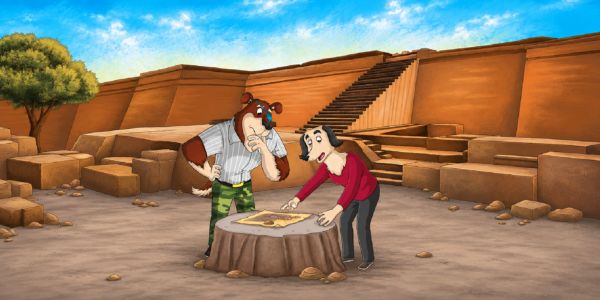
If you visit the ruins of Nalanda University today, there is a good chance your journey will take you through a railway station called Bakhtiyarpur.
At first glance, the name means little to most travellers.
Yet history gives it a peculiar significance.
Bakhtiyarpur is named after Bakhtiyar Khilji, the military commander widely associated with the destruction of Nalanda, one of the greatest centres of learning the world has ever known.
The irony is difficult to ignore.
One of humanity’s most extraordinary universities lies a short distance away.
The railway station many visitors pass through bears the name of the man believed to have played a central role in its destruction.
History rarely produces paradoxes quite like that.
It is precisely the sort of historical mystery that makes children stop and ask questions. In fact, the story is so compelling that it forms the backdrop of The Cheese Chase and the Lost Library, one of the most fascinating adventures in the Detective Col. Zoro series. Rather than presenting Nalanda as a collection of dates and facts, the story encourages young readers to investigate one of the greatest educational institutions in human history.
What Made Nalanda University So Extraordinary?
Whenever we think about universities, we tend to imagine lecture halls, libraries and students pursuing degrees.
Nalanda had all of those elements.
The remarkable thing is that it had them more than a thousand years ago.
Founded around the fifth century CE, Nalanda attracted scholars from across Asia. Students travelled from regions corresponding to modern-day China, Korea, Tibet, Mongolia and Southeast Asia to study there.
The university housed thousands of students and teachers.
It possessed vast libraries.
It encouraged intellectual debate.
It attracted some of the greatest minds of its age.
In many ways, Nalanda resembled a modern international university centuries before such institutions became common.
That alone would make it historically significant.
The scale of its achievement makes it extraordinary.
Centuries Ahead of Its Time
One of the reasons Nalanda continues to fascinate historians is that it feels surprisingly modern.
Admission was selective.
Students travelled internationally to study there.
Ideas moved across borders.
Knowledge was preserved, debated and expanded.
Subjects extended far beyond religion.
Scholars studied philosophy, astronomy, mathematics, medicine, logic, linguistics and literature.
In an age when much of the world was still organised around local centres of learning, Nalanda functioned as a global intellectual hub.
That is why describing it merely as a university feels inadequate.
It was closer to a knowledge ecosystem.
A place where ideas from different cultures met, interacted and evolved.
When children encounter Nalanda for the first time, they are often surprised by how advanced it was. That sense of wonder sits at the heart of The Cheese Chase and the Lost Library, where Detective Col. Zoro and his companions explore clues connected to one of history’s most remarkable centres of learning.
The Tragedy of Nalanda
Every great institution has a story.
Nalanda’s story contains one of history’s greatest tragedies.
By the late twelfth century, military campaigns led by Bakhtiyar Khilji swept through parts of Bihar.
Historical accounts associate these invasions with the destruction of major Buddhist centres, including Nalanda.
The university never recovered.
The famous libraries disappeared.
Centuries of accumulated knowledge were lost.
The scholars dispersed.
The institution that had once attracted students from across Asia gradually faded into history.
What makes the story particularly heartbreaking is not merely that buildings were destroyed.
Buildings can be rebuilt.
Knowledge, once lost, is far harder to recover.
Was Nalanda Destroyed Out of Fear?
The exact motivations behind Bakhtiyar Khilji’s actions remain debated.
Historians can often establish what happened more confidently than why it happened.
Yet it is difficult not to reflect on the symbolism.
A military commander seeking power destroyed an institution dedicated to knowledge.
One represented force.
The other represented learning.
One sought conquest.
The other pursued understanding.
Whether fear, hostility, indifference or strategic calculation drove the destruction, the result was the same.
One of humanity’s greatest centres of education disappeared.
That loss continues to resonate more than eight centuries later.
The Bakhtiyarpur Paradox
And this brings us back to the railway station.
Every year, visitors travel to Nalanda through Bakhtiyarpur.
The contrast is striking.
The place remembered for learning survives in ruins.
The name remembered in connection with its destruction survives on signboards, railway announcements and maps.
History has a curious sense of humour.
The paradox forces us to ask uncomfortable questions about memory.
Who do we choose to remember?
What do we choose to celebrate?
And how should societies preserve the stories that matter most?
These are not merely historical questions.
They are detective questions.
They require us to investigate evidence, challenge assumptions and think critically about the past. That approach runs through the entire Detective Col. Zoro series, where history becomes far more interesting when it is explored as a mystery rather than memorised as a list of facts.
Why Nalanda Matters Today
It is tempting to view Nalanda as a relic of a distant past.
That would be a mistake.
Nalanda reminds us that India has a long and distinguished educational heritage.
Long before modern universities emerged across much of the world, scholars were travelling thousands of kilometres to study in Bihar.
Long before globalisation became a buzzword, Nalanda was attracting international students.
Long before modern research institutions, intellectual communities were gathering there to exchange ideas.
The story challenges the assumption that advanced education is a recent phenomenon.
In many respects, Nalanda was centuries ahead of its time.
This is one of the reasons The Cheese Chase and the Lost Library works so well as an introduction to Nalanda for younger readers. Instead of focusing only on dates and historical events, it captures the wonder of a university that was shaping minds from across Asia long before most of the world had anything comparable.
Why Children Should Learn About Nalanda
Whenever I think about Nalanda, I find myself wondering how many children know its story.
Most know about kings.
Many know about battles.
Far fewer know about universities.
Yet institutions like Nalanda shaped history just as profoundly as armies did.
Learning about Nalanda teaches children something important.
Civilisations are remembered not only for the wars they fought.
They are remembered for the knowledge they created.
The books they preserved.
The questions they asked.
The ideas they shared.
That is why stories like The Cheese Chase and the Lost Library matter. They introduce children to India’s educational heritage through adventure, curiosity and investigation, making a complex historical story accessible without sacrificing its depth.
Exploring Nalanda Through Detective Col. Zoro
One of the challenges of teaching history is that the most fascinating subjects are often buried beneath dates, terminology and textbook summaries.
Nalanda deserves better than that.
Its story is filled with international travellers, legendary libraries, intellectual debate, mystery and loss. It contains all the ingredients of a compelling adventure.
That is precisely what makes it such a natural setting for Detective Col. Zoro.
In The Cheese Chase and the Lost Library, young readers encounter Nalanda not as a forgotten ruin, but as a living mystery. As Col. Zoro follows clues connected to a lost library, children begin to appreciate why Nalanda mattered, how advanced it was and why its destruction remains one of history’s greatest cultural tragedies.
The result is something rare.
A story that entertains while simultaneously inspiring curiosity about India’s past.
Final Thoughts
The story of Nalanda is ultimately a story about the power of knowledge.
Empires rose and fell.
Kings came and went.
Armies marched across continents.
Yet centuries later, people still speak about Nalanda.
Not because it conquered territory.
But because it expanded human understanding.
Perhaps that is the greatest lesson of all.
Power can destroy a university.
It cannot erase what that university represents.
And perhaps that is why the ruins of Nalanda continue to inspire awe even today.
Because long after the conquerors have disappeared, the pursuit of knowledge remains.
For parents looking to introduce children to this extraordinary chapter of Indian history, The Cheese Chase and the Lost Library offers an engaging gateway into the world of Nalanda, its scholars, its mysteries and its enduring legacy.
Frequently Asked Questions
What was Nalanda University?
Nalanda University was one of the world’s oldest and most influential centres of learning, located in present-day Bihar, India.
Who destroyed Nalanda University?
Historical accounts associate the destruction of Nalanda with the military campaigns of Bakhtiyar Khilji in the late twelfth century.
Why was Nalanda important?
Nalanda attracted scholars from across Asia and taught subjects including philosophy, mathematics, astronomy, medicine and logic.
Was Nalanda really centuries ahead of its time?
Yes. Nalanda functioned as an international residential university with thousands of students and scholars long before such institutions became common elsewhere.
How can children learn about Nalanda?
Books such as The Cheese Chase and the Lost Library introduce young readers to Nalanda’s history through engaging stories, mysteries and adventures.